

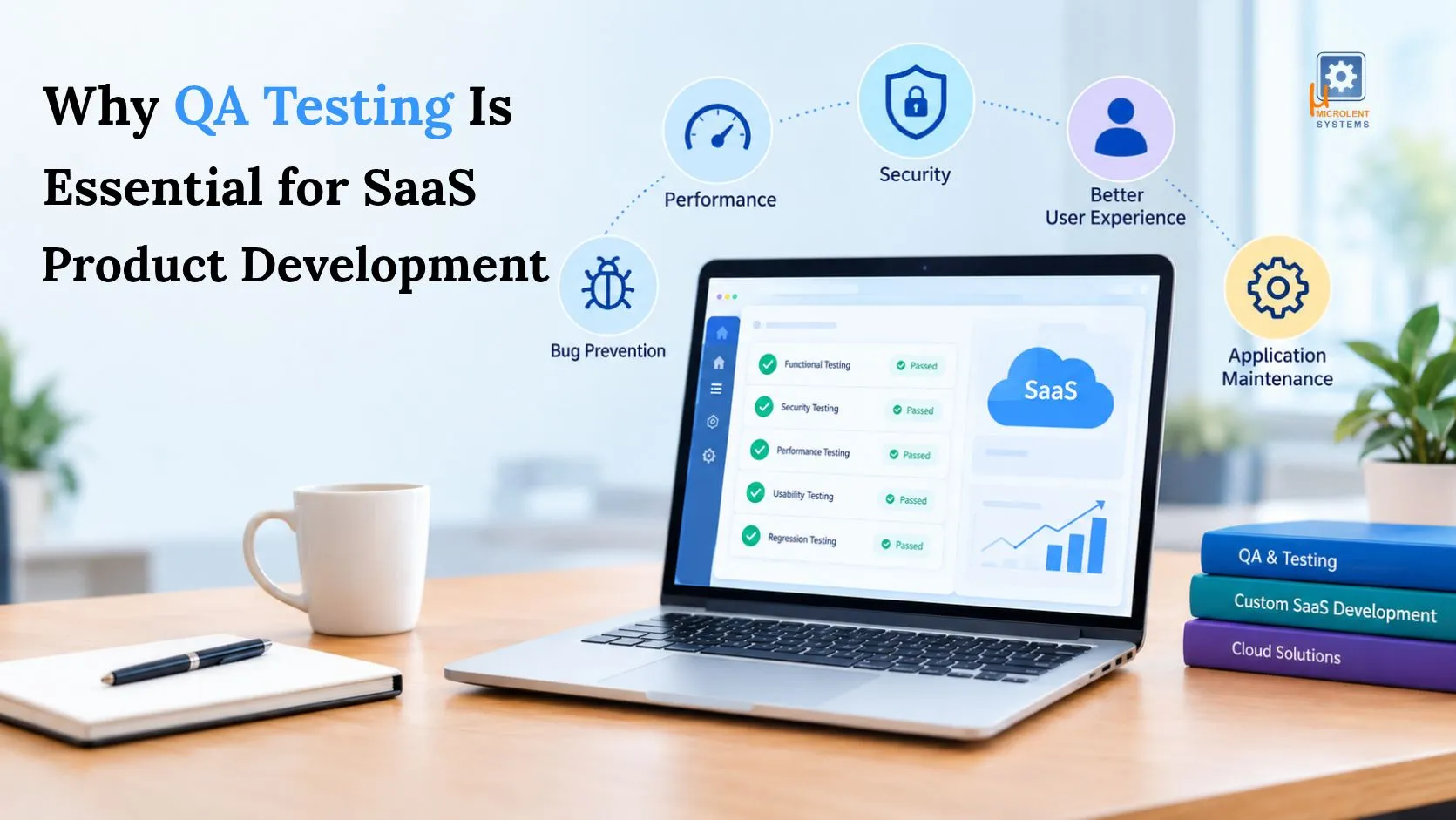
Building a SaaS product is exciting. Keeping it stable is the hard part. Users expect your software to load fast, protect their data, and never break after an update. One bad release can send customers to a competitor in a day.
That is why quality assurance (QA) sits at the heart of every successful SaaS product. In this guide, we explain why QA matters, where it fits into Custom SaaS Development, and how it supports maintenance and performance long after launch.
Quick answer: QA testing is essential for SaaS product development because it finds bugs, security gaps, and performance problems before users do. It lowers repair costs, protects customer trust, and lets teams release updates faster and with more confidence.
|
Need Reliable QA for Your SaaS Product? Our team provides QA and Testing Services that help you find bugs early, protect user data, and release with confidence. Talk to us about your Custom SaaS Development project today. |
Why SaaS Products Need QA More Than Most Software
Traditional software ships once and gets occasional patches. SaaS is different. You release updates often, serve many customers on shared infrastructure, and depend on third-party tools. Each of these adds risk:
- Frequent releases: A new feature can quietly break an old one.
- Multi-tenant design: One customer must never see another customer’s data.
- Integrations: Payment, email, and analytics tools can fail without warning.
- Subscription model: Unhappy users can cancel at any time.
Professional QA and Testing Services handle all of this in a planned, repeatable way, instead of relying on last-minute checks.
What QA Gives Your SaaS Business
|
Area |
Without Proper QA |
With Proper QA |
|
Bug fixes |
Found by customers, fixed in a rush |
Found early, fixed cheaply |
|
Security |
Hidden gaps in access and data handling |
Gaps found and closed before launch |
|
Releases |
Slow and nervous |
Fast and predictable |
|
User trust |
Complaints and churn |
Better reviews and retention |
|
Team morale |
Constant firefighting |
Focus on building new features |
Where QA Fits in Custom SaaS Development
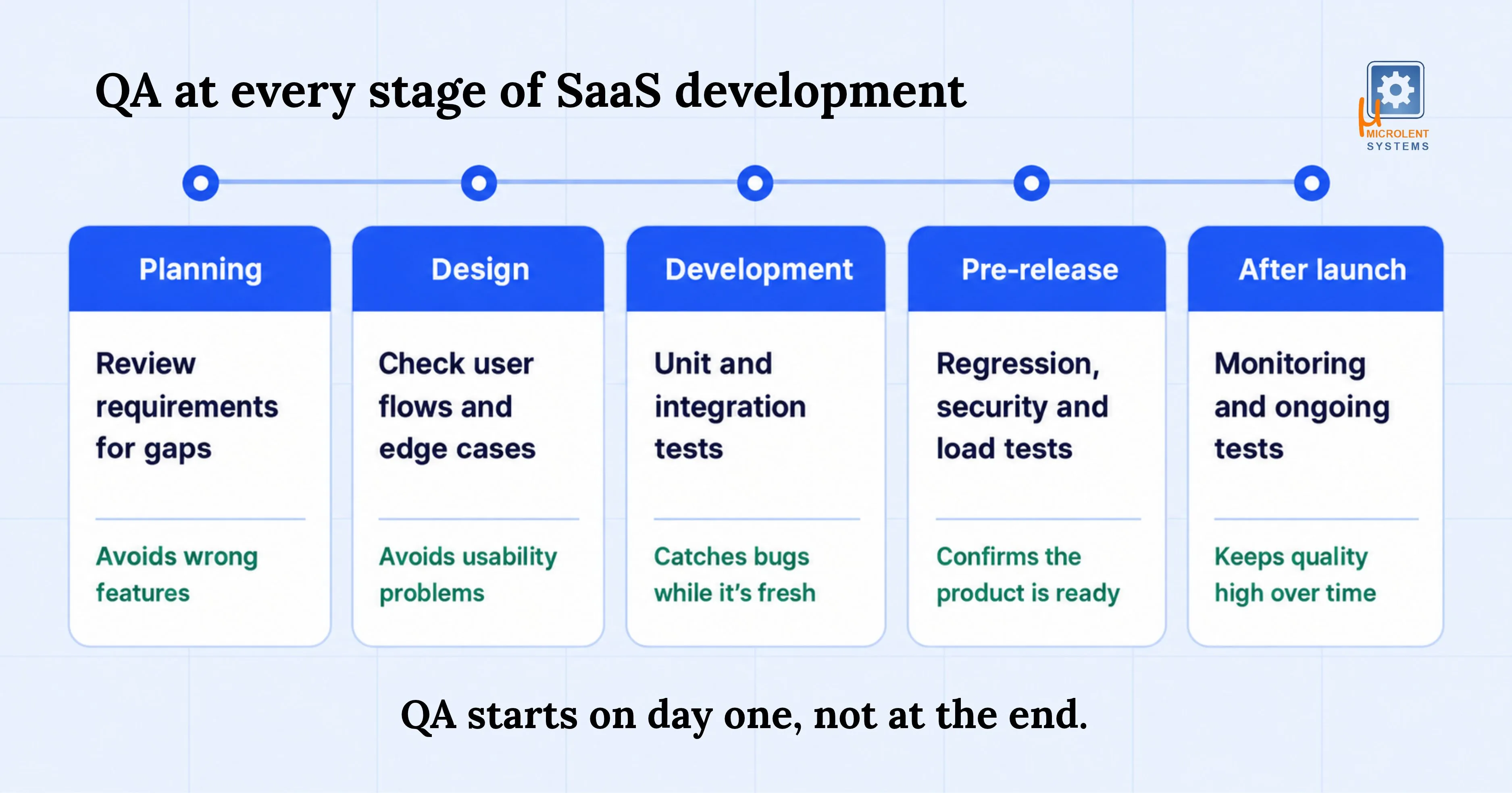
Many teams treat testing as the last step. This is a costly mistake. In strong Custom SaaS Development, QA starts on day one and continues at every stage.
|
Development Stage |
QA Activity |
Benefit |
|
Planning |
Review requirements for gaps |
Prevents wrong features |
|
Design |
Check user flows and edge cases |
Avoids usability issues |
|
Development |
Unit and integration tests |
Catches bugs while code is fresh |
|
Pre-release |
Regression, security, and load testing |
Confirms the product is ready |
|
After launch |
Monitoring and ongoing tests |
Keeps quality high over time |
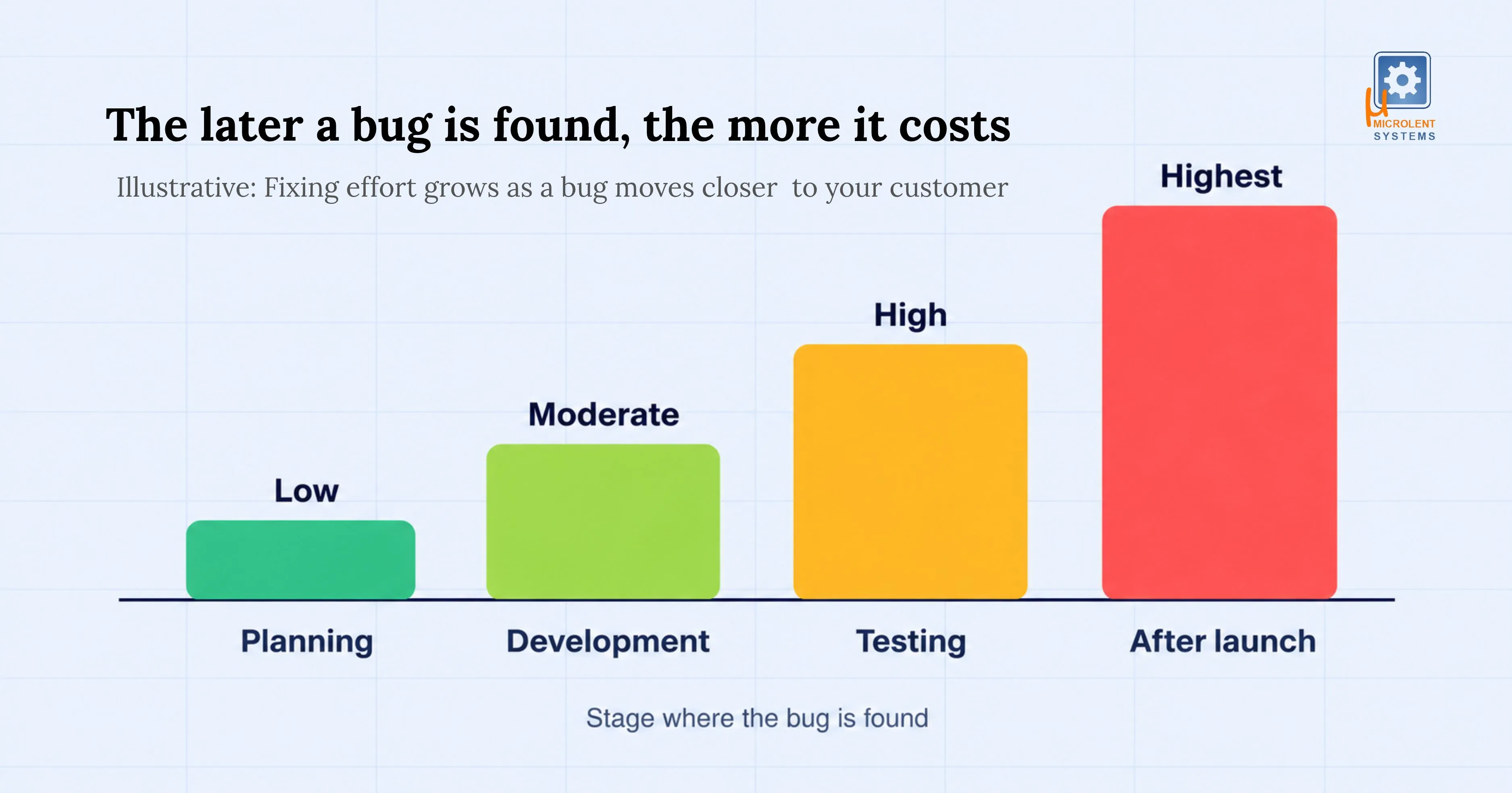
The earlier a problem is found, the cheaper it is to fix. A mistake caught in a planning meeting costs a conversation. The same mistake found in production can cost customers.
The Testing Types Every SaaS Product Needs
- Functional testing: Does each feature do what it should?
- Regression testing: Did the latest update break anything old?
- Security testing: Can attackers reach data they should not?
- Compatibility testing: Does it work across browsers and devices?
- Usability testing: Can a new user figure it out quickly?
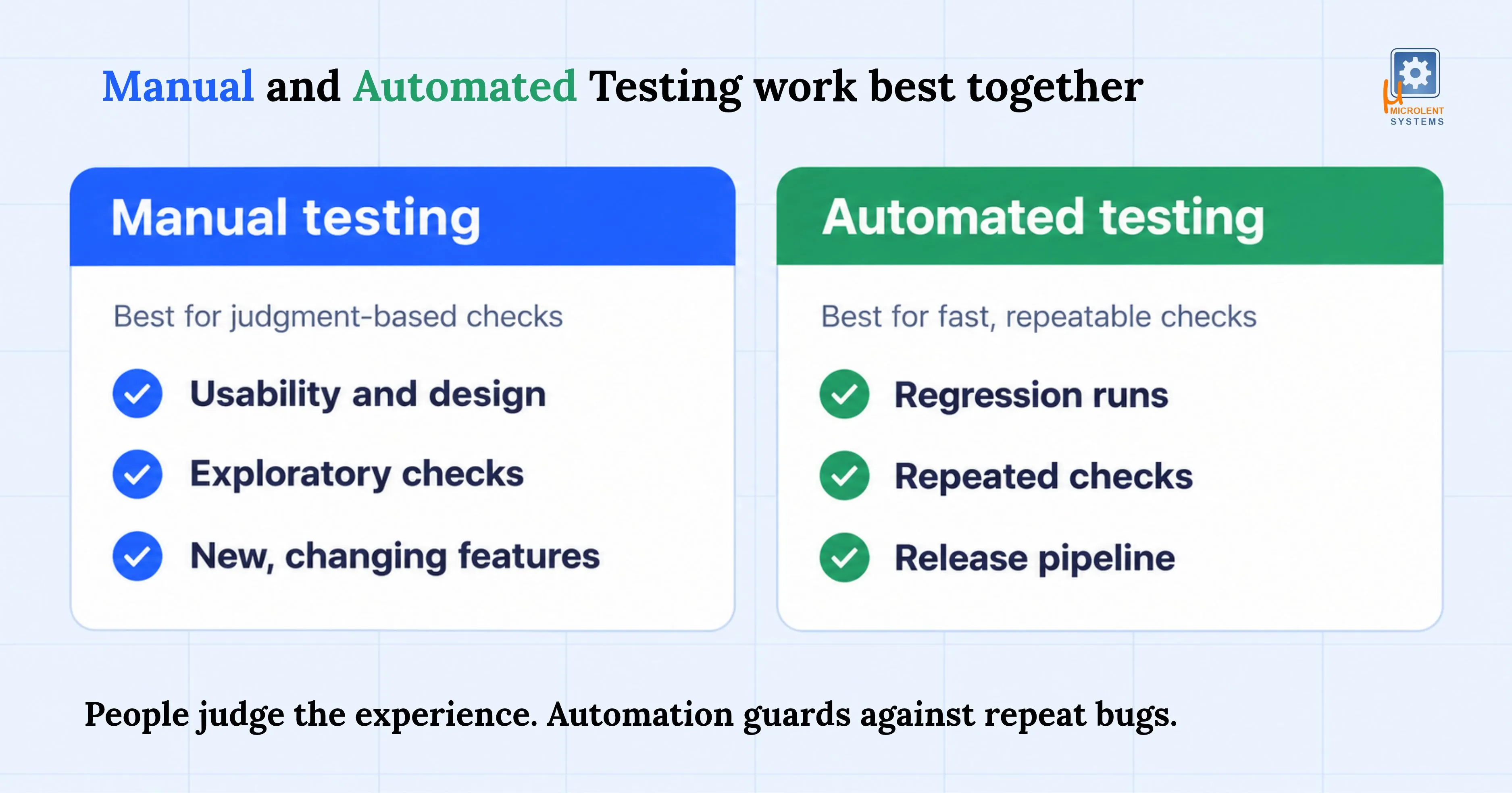
Manual testing is best for judgment-based checks like design and user experience. Automated testing handles repeat tasks such as regression runs, and it fits neatly into your release pipeline.
QA and Application Maintenance
Launch day is a starting line, not a finish line. Operating systems change, browsers update, and third-party tools shift. Without regular checks, a working product slowly degrades.
Good application maintenance relies on QA to:
- Re-test key features after every update or patch
- Confirm that security fixes do not create new problems
- Verify that new integrations work with existing ones
- Track recurring bugs so the root cause gets fixed
A maintenance plan that includes regular testing keeps small issues from turning into outages.
QA and Performance Optimization
A SaaS product that works but runs slowly still loses customers. Performance testing shows how your system behaves as usage grows.
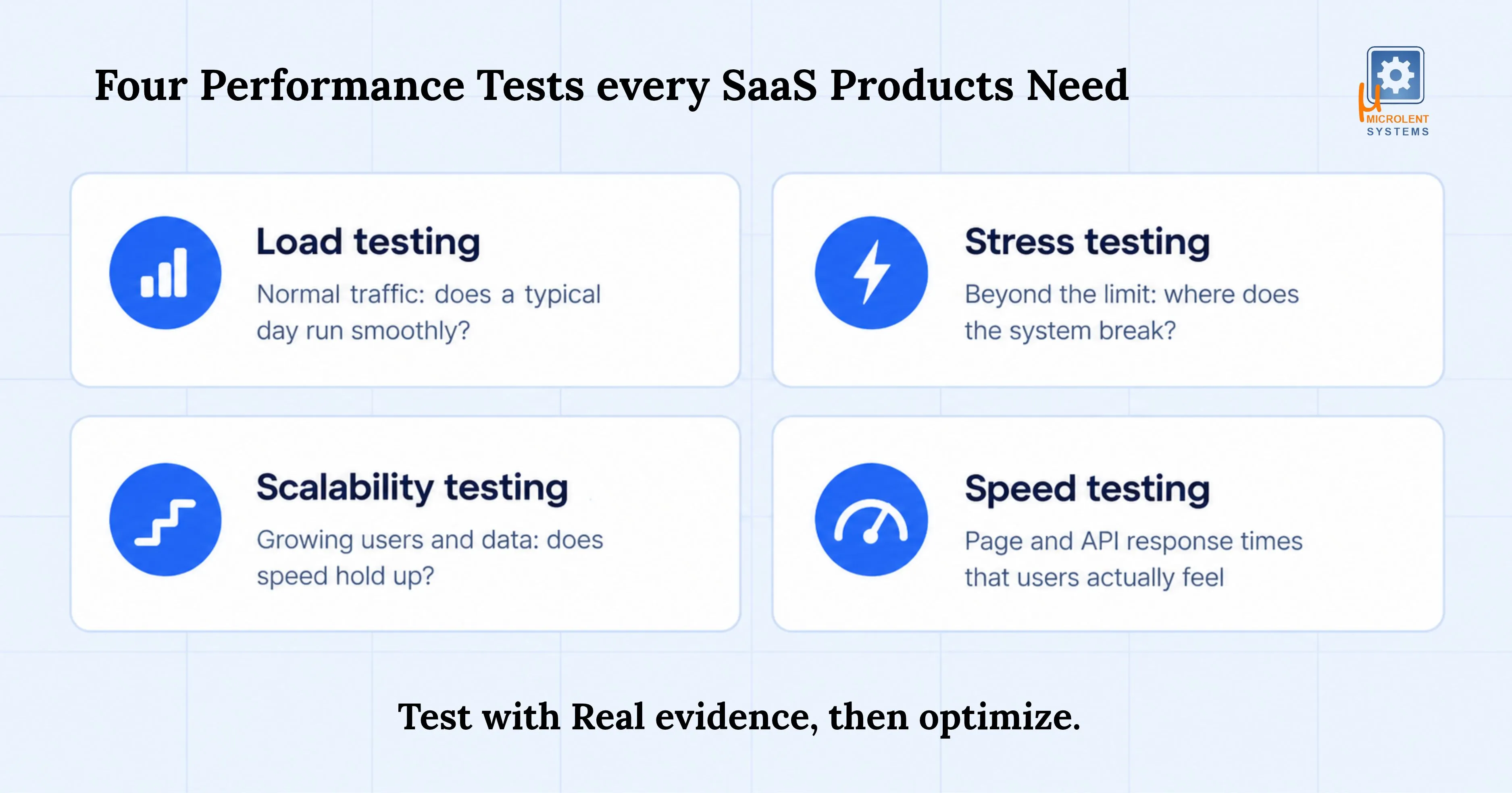
|
Performance Test |
What It Checks |
Why It Matters |
|
Load testing |
Behavior under expected traffic |
Confirms normal days run smoothly |
|
Stress testing |
Behavior beyond expected limits |
Shows where the system breaks |
|
Scalability testing |
Response as users and data grow |
Prepares you for growth |
|
Speed testing |
Page and API response times |
Protects user experience |
The results guide performance optimization. Your team can fix slow database queries, tune servers, and improve caching, based on real evidence instead of guesses.
In-House QA or Outsourced QA and Testing Services?
Small teams often wonder whether to hire testers or work with a specialist partner. Both can work, depending on your stage. Outsourced QA and Testing Services give you access to experienced testers, ready-made tools, and flexible capacity without a long hiring process. In-house QA gives you deeper product knowledge over time. Many growing SaaS companies use a mix of both.
Conclusion
QA testing is not an extra cost. It is protection for everything you build. In short:
- QA finds problems early, when they are cheap to fix.
- It should run through the whole of Custom SaaS Development, not just the end.
- Regular testing keeps application maintenance smooth and predictable.
- Performance testing supports optimization and healthy growth.
- Strong QA and Testing Services build the user trust that keeps subscribers loyal.
If you want a SaaS product that stays fast, secure, and dependable, make QA a core part of your plan from the very first day.
Frequently Asked Questions
1. What are QA and Testing Services in SaaS development?
QA and Testing Services evaluate SaaS applications to ensure their features, security, performance, integrations, and usability meet defined quality standards. These services may include manual testing, automated testing, regression testing, and performance testing.
2.How does QA testing improve SaaS product quality?
QA testing identifies bugs, validates business requirements, checks application behavior, and verifies that new updates do not break existing features. This helps teams deliver more stable and dependable software.
3.What types of testing are essential for SaaS applications?
Common testing types include functional testing, security testing, performance testing, usability testing, integration testing, compatibility testing, and regression testing. The appropriate combination depends on the product's functionality and business requirements.
4. When should QA testing begin in SaaS product development?
QA testing should begin during the planning and requirements stages and continue throughout development, deployment, and maintenance. Early testing helps teams identify issues before they become more expensive to fix.
5. How does QA testing reduce SaaS development costs?
QA testing can reduce costs by detecting defects early, preventing recurring issues, minimizing emergency fixes, and reducing rework. Automated regression testing can also make repeated quality checks more efficient.