

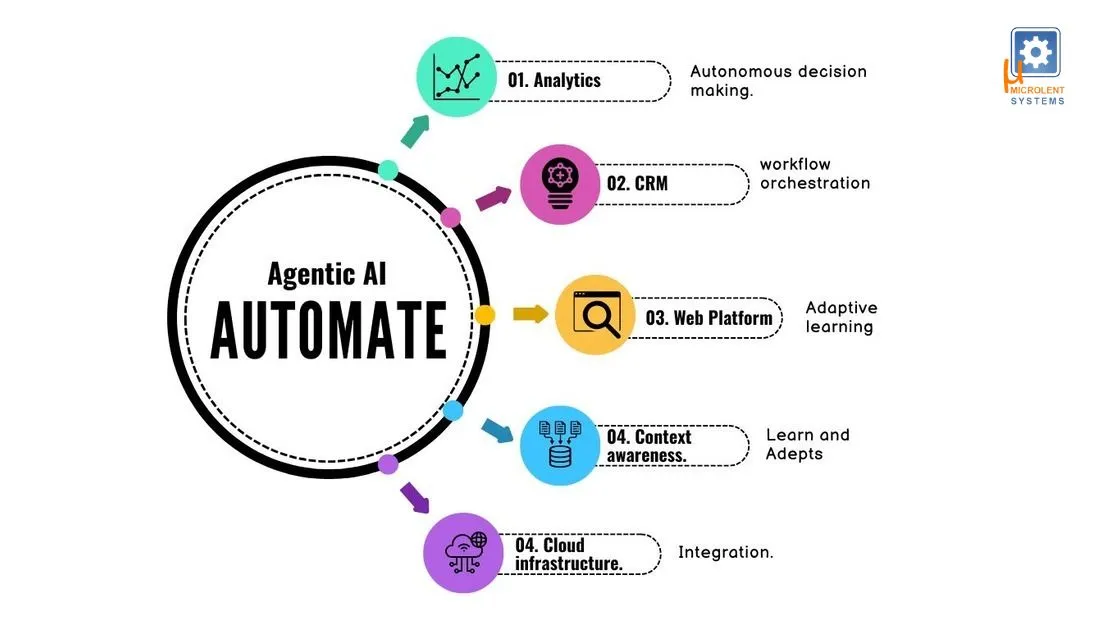
Web development is no longer just about design and functionality.
In 2026, high-performance websites don’t just display information.
They think, decide, and
execute workflows.
This is where Agentic AI automate systems redefine digital infrastructure.
Instead of building static websites connected to disconnected tools, businesses are now embedding autonomous AI agents directly into their web ecosystems.
The result?
- Faster operations
- Lower operational costs
- Smarter workflows
- Scalable automation
- Measurable performance
Let’s break down what this really means.
What Does “Agentic AI Automate” Mean?
Agentic AI automation refers to autonomous AI systems that:
- Analyze data in real time
- Make goal-based decisions
- Trigger multi-step workflows
- Coordinate across platforms
- Continuously optimize outcomes
Unlike traditional automation, which follows fixed rules, Agentic AI frameworks adapt based on performance signals.
For web-driven businesses, this means your website becomes an intelligent execution layer — not just a
digital brochure.
The Evolution of Web Development in 2026
Modern web infrastructure now connects with:
- Analytics platforms (like GA4)
- CRM systems
- Automation platforms
- Cloud environments
- Performance dashboards
However, most websites still rely on manual triggers and disconnected systems across the broader martech stack, leading to fragmented workflows and delayed optimization.
Agentic AI changes that by transforming the website into:
- A decision-making interface
- A workflow orchestration hub
- A real-time optimization system
This is where web development meets intelligent automation.
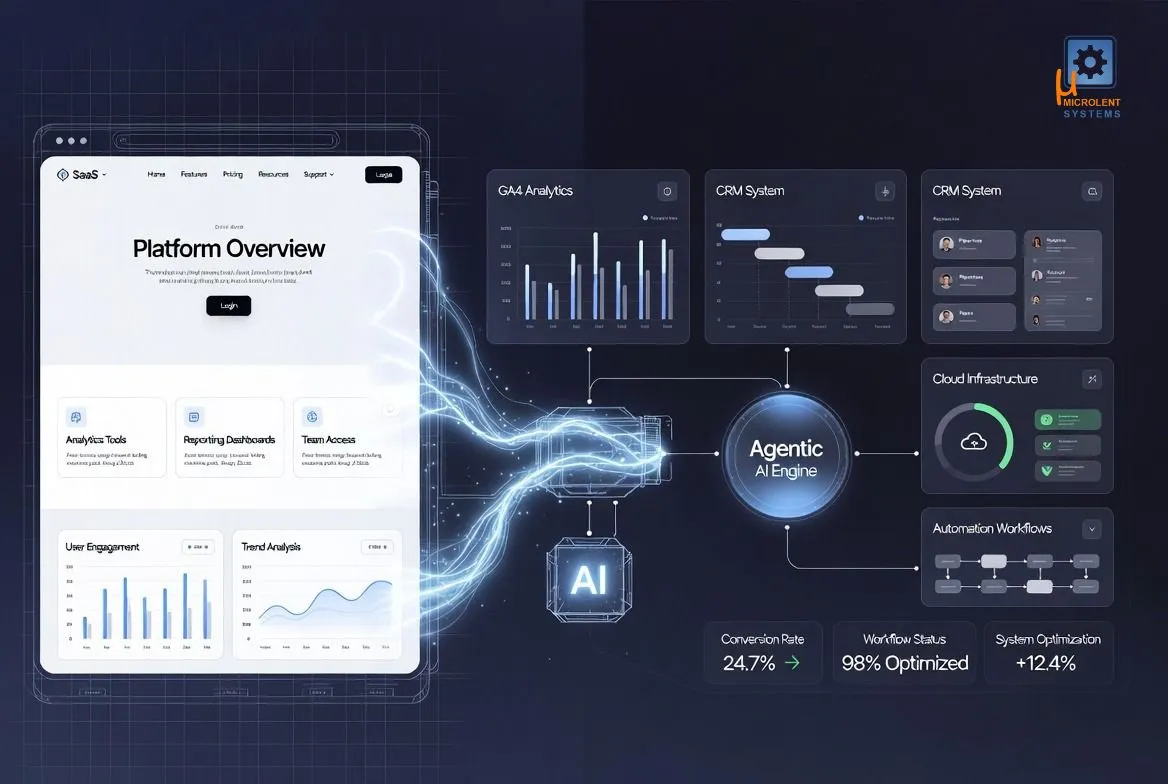
How Agentic AI Automate Workflows Through Web Infrastructure
When engineered correctly, Agentic AI frameworks can be embedded into your digital architecture to:
1. Automate Lead Routing
Instead of static form submissions, AI agents can:
- Evaluate lead intent
- Check CRM records
- Assign priority
- Trigger customized workflows
All instantly.
2. Optimize User Journey in Real Time
AI agents can monitor:
- Page behavior
- Funnel progression
- Conversion signals
Then dynamically adjust:
- Content blocks
- Offers
- CTAs
- Workflow triggers
This turns your website into an adaptive system.
3. Synchronize Analytics and CRM Data
By integrating GA4 + CRM through secure APIs, Agentic AI can:
- Detect performance drops
- Identify high-conversion segments
- Trigger campaign or workflow adjustments
- Update dashboards automatically
This closes the gap between web activity and revenue data.
4. Automate Operational Workflows
Agentic AI can coordinate across:
- CRM systems
- Marketing automation platforms
- Cloud databases
- Internal tools
Instead of disconnected martech components, you get a unified orchestration layer.
Engineering Scalable Agentic AI Frameworks
Agentic AI frameworks are not plugins.
They require:
- Secure API architecture
- Cloud-native infrastructure
- Data pipeline engineering
- Real-time event processing
- Workflow orchestration logic
- Performance dashboard integration
As a web development agency, Microlent focuses on full-stack cloud + AI engineering.
That means:
- Building intelligent web architectures
- Integrating GA4 + CRM systems
- Connecting automation platforms
- Developing performance dashboards
- Designing scalable AI execution layers
The goal is not experimentation.
It is production-ready AI infrastructure.
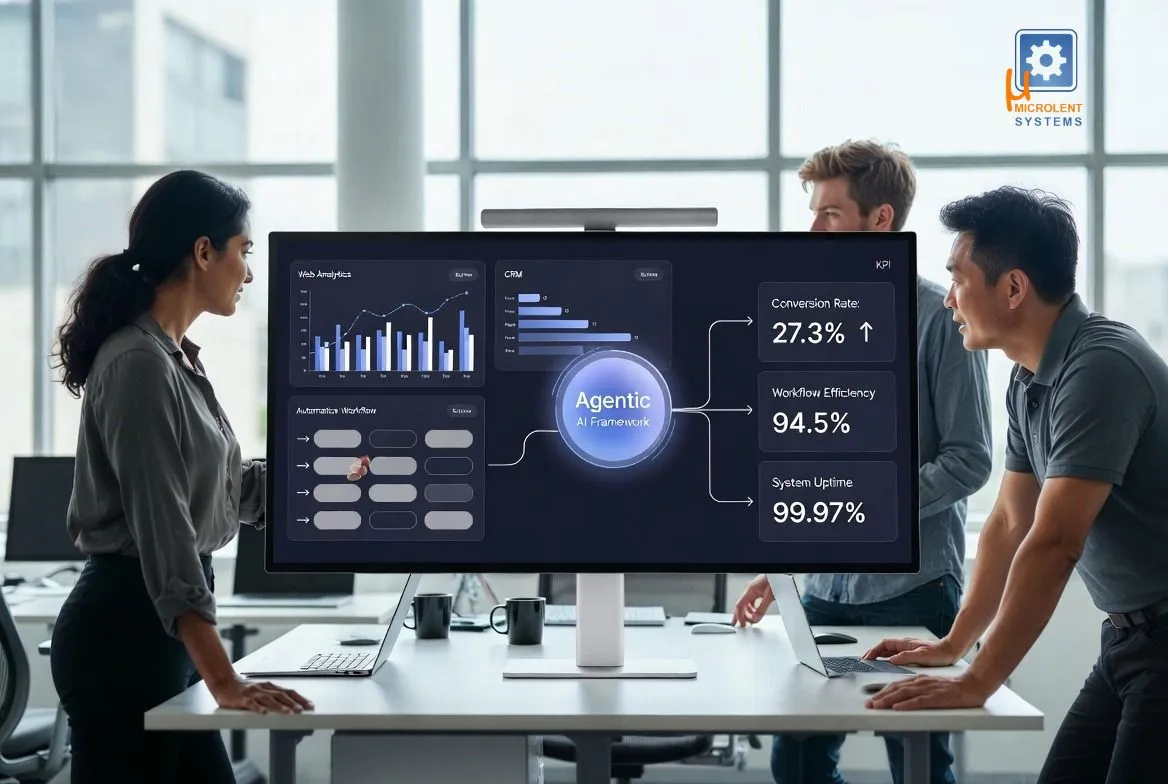
Agentic AI vs Generative AI
Many people confuse these two.
Generative AI:
- Creates text, images, code
- Assists with content production
- Responds to prompts
Agentic AI:
- Executes workflows
- Makes operational decisions
- Coordinates across systems
- Optimizes processes autonomously
Generative AI supports creativity.
Agentic AI drives execution.
For businesses building scalable digital systems, execution intelligence matters more than output volume.
Real-World Implementation Example
Imagine a web platform that:
- Tracks visitor behavior through GA4
- Syncs lead data with CRM
- Monitors pipeline movement
- Adjusts nurture workflows
- Updates executive dashboards
- Reallocates internal automation sequences
All without manual intervention.
This is what Agentic AI automate systems look like when properly engineered.
The impact includes:
- Faster processing cycles
- Reduced manual overhead
- Improved data visibility
- Lower operational costs
- Stronger system scalability
Why Traditional Automation Fails
Most automation projects fail because they:
- Stack tools without integration planning
- Ignore data consistency
- Overlook cloud architecture
- Lack attribution alignment
- Depend heavily on manual monitoring
Agentic AI requires structural design.
Without strong web architecture and integration engineering, AI becomes fragmented and inefficient.
The 2026 Shift: Websites as Intelligent Systems
Web platforms are no longer front-end layers.
They are becoming:
- Operational command centers
- AI-driven workflow engines
- Real-time decision hubs
- Performance optimization systems
Businesses that embed Agentic AI frameworks into their digital infrastructure gain long-term operational leverage.
This is not about adding AI features.
It is about rebuilding digital foundations with intelligence embedded at the core.
Implementation Approach
A structured Agentic AI deployment typically includes:
- Web architecture audit
- Data flow mapping
- GA4 + CRM integration design
- Workflow orchestration planning
- Cloud-based AI deployment
- Dashboard and attribution integration
- Continuous performance tuning
This ensures scalability, security, and measurable impact.
Is Your Web Infrastructure Ready?
Agentic AI amplifies structure.
If your website and backend systems are:
- Properly integrated
- Cloud-ready
- API-enabled
- Data-consistent
Then intelligent automation can scale rapidly.
If not, foundational engineering is required first.
Talk to an AI Solutions Architect
If you're exploring how Agentic AI automate workflows within your web ecosystem, the next step is architectural clarity.
A consultation can help you:
- Evaluate your web + cloud readiness
- Identify integration gaps
- Map automation opportunities
- Design scalable Agentic AI frameworks
- Build measurable performance dashboards
The objective is simple:
Engineer intelligent systems that scale.
Final Perspective
Web development in 2026 is no longer about static builds.
It is about intelligent architecture.
Businesses that implement Agentic AI automate systems today are not just upgrading websites; they are building autonomous digital infrastructure.
And that shift defines the next generation of scalable growth.
Frequently Asked Questions
What is Agentic AI in web development?
Agentic AI refers to autonomous AI agents embedded within web and cloud infrastructure that execute workflows, make decisions, and coordinate across integrated systems.
How does Agentic AI reduce operational costs?
By automating decision-based workflows, synchronizing analytics and CRM systems, and minimizing manual intervention, Agentic AI reduces inefficiencies and overhead.
What systems can Agentic AI integrate with?
It can integrate with GA4, CRM platforms, automation tools, cloud databases, and performance dashboards through secure APIs and orchestration layers.
Is Agentic AI suitable for small and mid-sized businesses?
Yes, if the digital infrastructure is structured properly. Scalable frameworks can be designed according to business size and complexity.
How long does implementation take?
Implementation depends on system complexity, integration depth, and cloud readiness. Structured deployment ensures long-term scalability.